I’ve suggested climbing ropes for a number of uses around the boat, including tethers, traveler control lines and snubbers. Some folks misunderstood, believing I was suggesting that climbing rope is globally better, and some misinterpret climbing test results, conjuring up negatives that don’t actually exist (climbing ropes are sacrificial, some how crumpling to absorb impact). Time to set a few myths straight.
Climbing rope is among the highest quality products out there. Logically, there is no market for anything less, since your life, very literally, hangs by a thread. But that does not mean it is better in all ways. In fact, the base material is no different than good quality marine rope, it's just woven differently.
The Cover. Or mantle, as it is called by climbers, is woven more tightly than double braid because this makes it less snag prone on rock. This also makes it more abrasion resistant against rock, coral and rough materials, because strands do not snag and cut. However, this does not make it wear longer through a chock. Double braid carries 50% of its material and strength in the core and 50% in the cover. This provides balance in spliced eyes. Climbing rope, on the other hand, typically places only 28-35% of the material in the cover, saving space for more core, which is what absorbs impact. Additionally, the tight cover makes dynamic climbing rope practically impossible to splice. You can’t open it enough to milk the core out, and if you do, you have no chance of burying it back in the main line far enough to make a strong splice. The core and cover are not balanced. Climbers don’t care, because a splice would only snag in a crack when they pulled the rope up. They use knots. And coincidentally, the core design is less sensitive to strength loss in knots, because the floating yarns do not feel the short radius. They are also less prone to fatigue, because there is less yarn-against-yarn friction. Climbing ropes are sometimes supplied with sewn eyes in the end; this should be only be done by companies familiar with sewing climbing rope and fall protection assemblies.
Core. Instead of braid or lay, the core consists of free floating yarns. Half are twisted in the conventional direction (s-twist) and half in the opposite direction (z-twist). Unlike laid rope, this make the line non-rotational under load; you hang on a 3-strand rope, the lay will straighten a little and you will spin. Darn inconvenient for the climber and prone to hockling or twisting in tackles. This free floating construction also maximizes stretch and reduces the tendency to cut if stressed hard in a fall over an edge. This latter characteristic is vital to climbers, since in the real world, climbing ropes only fail over sharp edges.
UV. Climbing ropes are somewhat more vulnerable because the mantle (cover) is thinner. However, climbers retire ropes after relativly few (compared to sailors) hours in the sun, so this is not a big issue. It often looks worse than it is, because climbing ropes are dyed bright colors for visibility and fading is obvious.
Fatigue. There is an annoying myth that somehow climbing ropes have poor fatigue resistance because they fail within 5-12 drop tests. The folk leaping to this incorrect conclusion assume they are somehow sacrificial, because that feels like common sense to them, but this is without any basis in fact. The truth is exactly the opposite. First,
only climbing ropes
can pass the drop test. All other weaves and rope types fail in less than the minimum number of cycles, or if strong enough, result in an impact force that would either tear anchors loose from the cliff or injure the climber. Second, the drop test, which is sudden, severe, and
intentionally takes place across a sharp edge, has no relevance to actual use within the allowable working load. In fact, the free floating yarns naturally experience less yarn-to-yarn chafe and withstand fatigue much better than other weaves. Obvious, really. The fatigue life of climbing ropes is several times better than other nylon weaves and comparable to polyester double braid, but with more stretch (wind farm research into mooring lines).
So how do they stack up? Among nylon rope constructions, which should you chose?
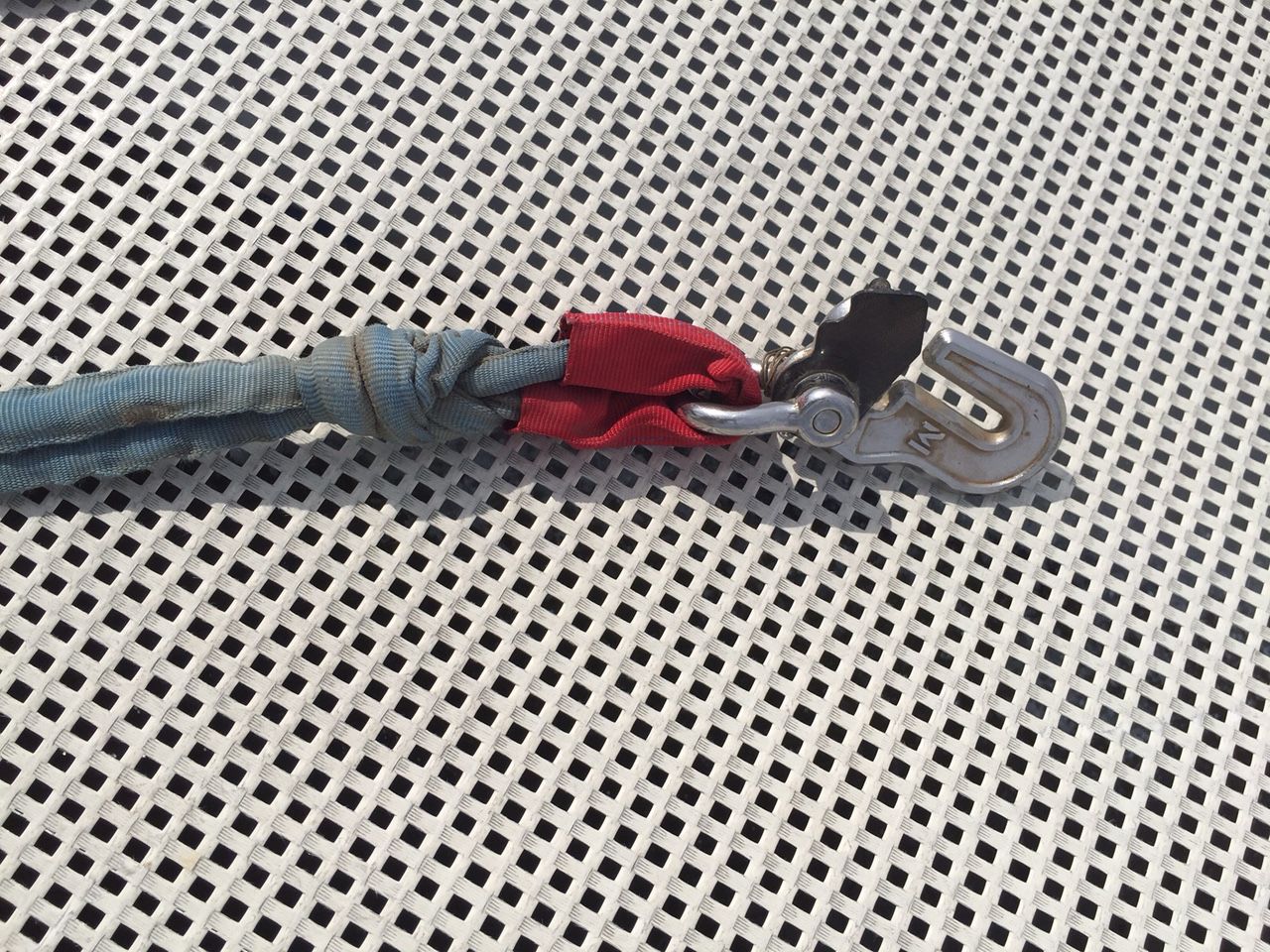
[The images are of tests performed by swinging a heavily weighted rope pendulum so that it dragged across a cinder block, simulating rocks, coral, and concrete docks.]
Double Braid

- Good flexibility.
- Fair knotting.
- Medium grip.
- Moderate splicing difficulty.
- Medium to poor chafe resistance .
- Less stretch .
- Poor fatigue resistance.
Economy, good hand, medium chafe resistance, economy, and reasonable splicability makes it is popular for docklines and smaller anchor lines. 3-strand is a better choice for docklines if chafe is a serious problem. 3-strand or brait is preferred for larger dock lines. The same loose braid that makes splicing easy makes it prone to snagging on rough surfaces, increasing chafe in some cases. Not a great choice for anchor rope, since combination windlasses can’t grab it, it is hard to store, chafe resistance is limited, and so is stretch. OK for traveler control lines.
Plaited rope
- Better flexibility.
- Good knotting.
- Better grip.
- Easy to splice.
- Poor chafe resistant.
- More stretch.
- Better fatigue resistance.
The primary advantages are ease of splicing, compact storage (it is very limp), and increased stretch. However, the loose weave reduces chafe resistance because it can snag very easily on rocks. The only thing I like it for is big docklines. Some favor it for anchor lines, but they haven’t looked at the chafe test results.
 3-Strand
- Less flexibility.
- Better grip.
- Poor knotting.
- Easy to splice.
- Good chafe resistance.
- More stretch.
- Better fatigue resistance.
Good grip, chafe resistance, ease of splicing, and stretch make it the top choice for anchor lines and docklines in tough locations. Also excellent for anchor snubbers, particularly if chafe is an issue. If you need more stretch, make the snubber a little longer, up to about 40 feet.
Dynamic Climbing Rope
- Good flexibility.
- Best knotting.
- Less grip.
- Very difficult to splice. Use knots or professional sewing.
- Moderate to good chafe resistant. About equal to polyester double braid but not quite as good as 3-strand..
- Most stretch.
- Best fatigue resistance.
In spite of having a lighter cover, climbing rope is very chafe resistant, This is because, like webbing, the tight cover resists snagging. Instead, it fuzzes, resisting wear.
Limited grip and chafe resistance limit the usefulness of climbing rope as anchor rode to boats less than 27 feet long, where it excels. However, it is a top choice for traveler control lines because it wears well, runs well through blocks, will not tangle, is comfortable in the hand and has superior stretch (eyes are sewn--DIY is acceptable because the load is low). If you need extra long tethers (a multihull thing) it is just the thing, but you will either have to knot the ends or have them professionally sewn (not a sail maker, but an arborist gear company—it’s a specialty). Use 8mm for this; larger climbing ropes roll underfoot too much. .Finally, dynamic climbing rope is only available as twin (6-7mm), half (7-8mm) and single (9-11mm).
Conclusions. Unsurprisingly, the best product depends on the application. I like 3-strand for anchor rope and snubbers, double braid for docklines, plaited rope for big dock lines, and climbing rope for long tethers, travelers, and snubbers. Horses for courses.