I'm quite sure I will not reach the summit, but I toil on the slope. Sailing. Shop skills. Engineering skills. The view is improving every year. As for understanding people and cultures, I'm not far above the canyon, but at least I know that.

I'm quite sure I will not reach the summit, but I toil on the slope. Sailing. Shop skills. Engineering skills. The view is improving every year. As for understanding people and cultures, I'm not far above the canyon, but at least I know that.
A coward. A corrupt politician trying to sway an election. Un-American. A humiliation to the Republican Party. A humiliation of the Republican Party. Please count the American servicemen's lives that have been spent and lost in the fight against totalitarianism and communism. Trump spits on our brave men. He likes Putin because he is like Putin.
There aren't enough words for a worm like this. Further, the entire Republican Party, every Representative and Senator, has made itself culpable. No blame-shifting allowed, when you support such a man. You are hiding behind such a man.
By law, above-ground gasoline tanks are ALWAYS painted white or silver. This minimizes solar heating and thus minimizes day/night breathing emissions. I'm a tank inspector from way back. I had a consulting business, and I've been around, over and in thousands of tanks, from 500-10,000,000 gallons.
E10 loves to absorb water from the atmosphere. If the water content reaches about 0.5% (more in summer, less in winter), the water will separate, taking the alcohol with it and creating a 15%-by-volume layer that won't burn. Phase separation, as this is called, is very unusual because absorption from the air is a very slow process, taking months. The usual cause, in fact, is a leaking filler cap or vent, not absorption. It's a slow process, taking months to become important. But prudence requires closing the vent whenever the engine is not in use. Spray can sneak in through the vent.
Water absorption does NOT need to reach phase-separating levels to cause problems. At just a few hundred ppm, sludge generation increases. The gasoline becomes weakly conductive and galvanic corrosion blooms in the carb bowl (brass and aluminum are an active pair). Gasoline also evaporates, and the loss of the most volatile portions can make starting more difficult, and increase gum formation. Better to keep it sealed.
But a sealed tank builds pressure. Over time, UV damages the tank and the tank becomes weak. It would be nice to keep it out of the sun. Some people like Sunbrella covers. But on my boat, it would just get grungy with spilled oil, gas, lichens, and algae.
Paint is simpler. Since the tank is mostly covered by the seat, there was no need to paint the whole thing. If it was, I might paint the whole thing, leaving only the code stamp exposed (not on a seam).
Simple. The tank is protected from UV and stays cool. It's been seven years, 365 days per year, and the paint is still there.


The leading cause of death for tiller pilots is moisture intrusion in the rain. In the UK they are common on eBay, but not here.
A few days ago I had to take a 4-hour rainy sail to move my boat between marinas for service. After three years (Total Boat Krypton) the bottom needed anti-fouling paint, and Herrington Harbor North has decided that hauling trimarans scares them, so they won't do it anymore.
So when the rain started, I pulled out the cover I had made from a scrap of clear vinyl snipped from an old dodger. No sewing was required. I just folded it, somthing like wrapping a box, and popped a rivet in each of the corners. The bottom is open for ventilation. The tiller pilot stays bone dry, since it produces a small amount of heat in service, sufficient to prevent condensation and evaporate any stray drops.
You can see the buttons and use them right through the vinyl. Very easy.
You can read the details here: https://www.practical-sailor.com/marine-electronics/no-sew-diy-tiller-pilot-cover/

No, they are not, Donald. These are taxpayer-funded election ads.
This is how tyranny starts. He read the tyrant's handbook and memorized it. Please watch this docuseries on Netflix. It is an excellent history of tyrants, starting before Rome, moving through Hitler, Qaddafi, Idi Amin, North Korea, and forward. It is not about current events.
How to Become a Tyrant, Netflix
Does he even think about what he says?
“There’s something wrong with a country that can allow people to write purposely negative stories,” Trump added. “Now, if they want to write them, that’s fine, but I don’t have to let them into my, into the people’s house.”
No, Donald, it's not your house. You are a guest.
And the Justice Department, the toadies they are, can seem to do much better.
"The Justice Department urged a federal judge to keep CNN, Politico and MS NOW reporters off White House grounds, arguing that President Donald Trump may restrict their access over national security concerns ..."
Let's focus on "security concerns." Either (a) your people are releasing classified information, which is both unlikely and also an internal problem, or (b) the press saying negative things about the administration is treasonous, simply because they disagree with you. Really, it is the latter. You could argue that making the country sound divided and mentioning potential weaknesses is bad for national security; but this forces the leap to saying the administration has the right to control the narrative in all things, and that takes Donald so far past the First Amendment it's just criminal.
I hope this goes to the Supreme Court. He'll get stomped. I've seen a lot in the prior four-year term, and even more in the past 20 months, and this once again goes beyond the pale. The President does NOT get to control the narrative. If he can't take the heat, that speaks to both megalomania and clinical narcissism.
Say what your think needs to be said. Check your facts, and then say it. I wish I could keep this a strictly-sail blog, but I've got to say what I have to say. We have a rogue administrator with unrestricted power. A tyrant that believes he is unbounded by law.
And so a large portion of the world's supply of oil will be constricted, possibly for decades.
This, by the way, is part of why the war in Ukraine was not interesting. No benefit to us. Even among liberals, I think there is a sense that this is Europe's problem first, ours only second.
The business in Gaza is nuts, from the music festival start to where we are now. I think the timing was convenient for the above "conspiracy theory," but probably only that.
Pipelines will be built to the Mediterranean. That will take time. The straits will become less relevant within 2-5 years. Some already exist, and I am sure they are looking to upgrade this capacity. Not so good for China, but they will find a way.
So is my Big Oil conspiracy theory good for the US or not? It's not nice or globally neighborly, but financially, it's not clear. It depends on how you are invested, to be sure, and how you are employed. Some benefits will spill beyond big oil, and fuel prices will be up for a while.
But I don't see current events as random. I see greedy, certainly corrupt, politics. We elected a casino guy--what should we have expected?
-----
Today Trump asked the Ukraine to stop targeting Russian diesel production. It could cause a shortage. Isn't the hypocrisy in that just mind rattling? Another example of "watch the shiny ball" to distract people from the important stuff. Unfortunately, there are gullible people.
-----
Yes, I am posting more politics. Free speech. What happens when the people do nothing and say nothing? I hope to get back to sailing and tinkering. I'm retired now. That is what I should be doing. But it's raining today.
All the conversation focuses on the next 50 years, because we don't care about people other than ourselves and our generation. I understand. I'm not going to turn the AC off because of something 300 years from now. Having no grandchildren, I don't even have a genetic imperative. Tough luck, folks. The problem is that CO2 is rising to extinction-level event heights, and doing it faster than ever before.
Note: The middle road is not going to happen. We will continue burning fuels, perhaps at a slower rate, until they are gone. In 10 million years, natural processes will sequester the CO2 and something unpredictable will follow. Of course, that may happen anyway. We're just urging it along; something that might have happened in 100,000 years or 10,000,000 years will happen in a few centuries. We're not good at waiting.

Temperature is going to do the same thing. That means "hothouse" temperatures that, on their own, are nearly unsurvivable. More to the point, ocean temperatures rise, oxygen solubility in water falls, pH drops, and the ocean becomes a very different place.

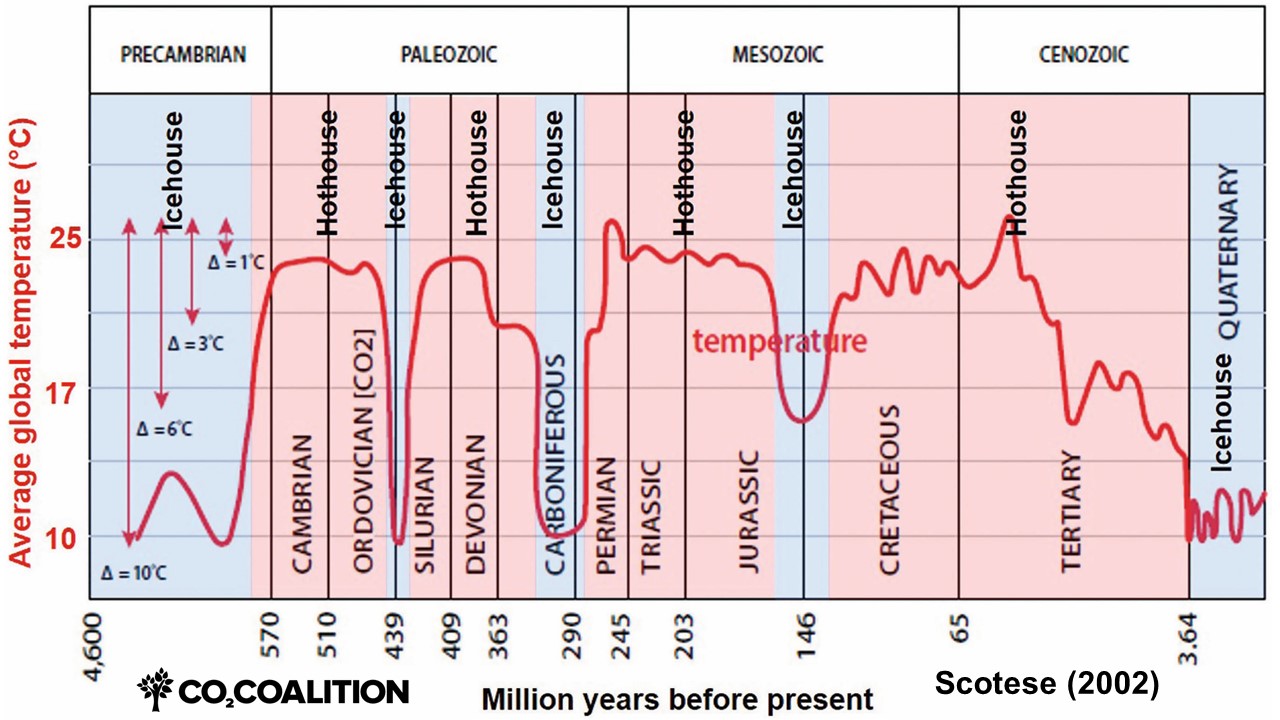
I'd love to go on ice for 500 years to see how the movie ends. I don't think I'd want to live there, but I am curious. The math paints an interesting picture.
I'm not sayin' there is anything we can do about it. It's like watching an alcoholic or addict crash. Mostly, they have to hit bottom, to where there are no alternatives, and most of the time, they don't change things then. We're going to see this even more clearly in another 50 years, and we still won't do anything, and it's going to crash. We're going to burn all the fossil fuel we can. At most we will stretch it out by a geologically unimportant wink of time.
Sorry. I don't have a solution or suggestion. I belive the only real solution is to have fewer children and just let it happen. Rather fatalistic, to be sure. Human nature can't make the turn. Just watch politics, for a read on the public nerve. Most don't look beyond next year, and very few look seriously beyond their own mortality. If they do, it's like a person standing on the beach staring at a tsunami, knowing that it is already too late to run. I doubt the universe will notice.
You can get this at the library. A very good read, about the 6 billion year history of CO2.
The Story of CO2 Is the Story of Everything: How Carbon Dioxide Made Our World – A Natural History of Climate and the Future of Life
https://www.amazon.com/dp/B0BXLM5617?lv=shuf&channelId=510&plpRedirect=mhFallback
Even my conservative side finds Trump unaffordable. And it's not just him. He has a Congress full of lickspittle toadies with no shame.
I can't say that I am surprised. I was wondering when this would come. I'm not surprised. What does surprise me a little is that apparently neither the US or Saudi Arabia saw it coming. That's a stratigic and military f__k up of epic proportion. We had assets on-site.
PLEASE remember who pledged to dismantle Obamacare and who has worked tirelessly to reduce Obamacare subsidies (increase rates).
He is a pathological liar, hoping people are gullible. He does not think the rules of hinesty aply to him in any way. He is trying to bribe people to get votes. And he will do whatever it takes to reduce Obamacare subsidies (increase rates) as soon as the elections are over.
He's scared. And he's doing his usual schtick and jive. So transparent.
Think it through.
A trivial DIY project I put together about 30 years ago, but it became sufficiently popular with the family that I ended up making about six of them, some decorated by budding elementary school artists (our kids). A simple modification of a common uniform service tool.
Just some scrap 3/8-inch plywood cut to shape, sanded, held together with drywall screws, and painted. Not beautiful nor perfectly crafted, but very handy. We keep almost all of our clothes on hangers (double rods in every closet), so we have a lot of hangers. Taking the hangers out of the closet frees up space in the closet.
rev. 9-10-2026
In this case, there is no good commercial option. As common as these are, I have no idea why.
My F-24 trimaran has 8 of these hatches on the outriggers (amas), and when sailed in spirited conditions, they go underwater a lot. The hulls pant a little with the water pressure, and unless snugged down, they leak a lot. It can be gallons per hour. Snugged down properly, they get stuck. Keep em' clean, keep em' lubed, they can still stick.

Beckson makes a crappy wrench. People tap them with blocks of wood, use oversized Crescent wrenches, and even metal pin spanners, all of which can be damaging.
The solution is a DIY wrench made with custom fitted stubs that fit the pockets, bolted or screwed to a wooden handle. A bad picture, but there will be a better article in Practical Sailor.


-----
In fact, after further searching, there was a guy who marketed a version milled from King Starboard, out of his garage. That was 14 years ago, and the website is gone.
Easy Out Deck Plate Removal Tool

And now from the same guy, "Many people suggested changing the name of New Mexico, one of the great vote cheating states of all time, to NEW AMERICA. So much more prestigious and beautiful for the people of that potentially incredible State. Wow, I Love It!!!"
Third-grade diction and multiple mistakes. A sub-adolescent taunt, on both Truth Social and the White House X account, obviously intended to distract. "Look at me, holding this shiny ball." People fall for that. And of course, no one in the White House is embarrassed, or rather, they won't show it. I guess, working in (some positions-- there are many very good people) the White House is embarrassing on the face of it these days.
This is disappointing, disturbing, and frankly terrifying. We have an unstable man with his finger on the button.
---
I promise, the next post will be about sailing. But there comes a point when keeping quiet is complicity. This is not OK.
The President is now pretending that he can change the name of Lake Ontario by signing an executive order, the obvious result being another humiliation United States citizens on the world stage. He ebarrasses himself once again, but is increasingly oblivious to the obvious. Let's just call it what it is.
Diminished mental capacity.
America was strong. Past tense. Now we are medium and trending downwards. It's hard to be strong with no friends.
----
Just as with the Gulf of America change, Google Maps went right along with this embarrassing change. Wimps.
I prefer Mapquest anyway. Use Mapquest.
---

So why did the UN choose this time, of major global strife and instability, to vote on a map? Rather obviously, it was a poke at someone who believes he can unilaterally rename stuff, like the Straights of Hormuz. That made it worthwhile, beyond the Equal Earth reasoning. Basically, he is being ignored, and it bugs him.
A year ago, I made the leap to lithium (LiFePO4). My lead AGM gave up the ghost, the result of a failed solar panel allowing it to go flat for too long. It was also long in the tooth. I wrenched my shoulder maneuvering it out of its hold, which was horribly located, so the decision was significantly based on its being half the weight.
I'd read up on lithium. I picked one that had been vetted by a battery expert I trust. The BMS (battery management system) would cut off charging below freezing, which can be an issue for me. We've all been told that charging below freezing is bad, resulting in lithium plating. But ...
One source said 0.05C (5% of battery capacity) may be considered safe. My panel can only charge 0.025C on the best of days, and typically more like 0.010C in the winter, when this would matter.
C= charging rate/capacity. Many of the studies were done at C=1 to 3, meaning that a battery could be fully recharged in 20-60 minutes. That's FAST for solar systems. I doubt many sailors can recharge the bank in less than 5 hours, and most, more like 10-20 hours (C=0.1 to 0.05).

They seemed to think that copper oxide or copper oxychloride were somehow different, because. obviously, bronze props foul.
These pipes were in the water for a year. The only one with no hard grow (zero) is the plain pipe with no anode.
Where did they think the idea of copper sheathing came from?
I think they slept through chemistry class.

... to the sole benefit of US Big Oil? I think so. This seems ... obvious.
We have radicalized countless people in the Gaza and Iran. How could we not have? With the rise of drone-based munitions, it won't take much to harass most anything, forever, including the Straights. You don't have to close them air tight to convince shippers to make other plans and to increase shipping costs. That is all that is needed.
Drawing out the war in the Ukraine serves the same purpose; US oil and LNG exports to Europe have surged. The longer it lasts, the hotter it gets, the longer it will take for Europe and Russia to normalize relations.
It seems we have intentionally created a new "warm" war, that won't end, at the cost of many lives, at huge cost to the taxpayer, to the sole benefit of Big Oil.
----
I can see this. It seems ... obvious. The only alternative is that Donald Trump is massively stupid. Possible. But I think corrupt and self-serving is far more plausible and likely.
Can we afford such intentional mismanagement of world events? Forget your politics. By the time all is said and done, your PERSONAL share is going to be a new car. Bullshit.
---
rev. 9-12-2026
Now the Red Sea is closing. Not surprised. Same story.
Bald eagles were very nearly extinct when I was a boy. The first one I saw in wild was under a bridge in my 20s. Now they have become so common as to become destructive pests in the marina.

This bird was less damaging (1" = 1' scale model of my F-24, made from rebar and 3/16" wire):

The carnage: I'm not anti-eagle, but For the last two years I've given up on wind instruments aloft, after replacing two vanes, only to have them destroyed. I've been using shroud ribbons and bow vanes, which work very well.


The ones they sell at the store are for lightweight paints that only need a lightweight re-mix. They are not for heavy anti-fouling paints that have settled copper. They can handle high viscosity and they are a bear to clean.
I had to mix 30 paints for this project.


Not an F-24 (a bit faster), but relatable.
[Note. This was generated by a velocity prediction program, not testing, so that is that. Typically, they are optimistic, assuming flat water, perfect sails, an empty boat, and glass-smooth hull with no anti-fouling paint. You can subtract 0.5-1 knots, depending on the point of sail, although I've been very close to this.]

We've all seen the graphic below, in some form. The right side shows the point in terms of apparent wind (direction indicated by a flag on the boat), and the left side shows the true direction, sometimes indicated by waves. The right side is traditional.
First, the obvious "error." Directions are all in terms of apparent wind, except for close-hauled. And the first thing we see, right at the top, is a 90-degree no-sail zone based on true wind, not apparent wind. An agreed-upon misrepresentation. The actual apparent wind when close-hauled is more like 26-35 degrees, depending on conditions and the boat, so the chart cheats on that one. Why? Because the term close hauled does not tell us where we are going, which apparently matters.
The second problem is that of clarity. On most boats, basing it on apparent wind makes sense, we think. That is what you trim for. But in the case of a performance catamaran sailing close-hauled, if we simply bear off 10-30 degrees, boat speed doubles, the sails don't really need re-trimmed, though we could crack the sheets a few inches for best speed. We are now sailing at 80 degrees to the true wind. The apparent wind has moved aft a little (not much). But as far as the chart is concerned, we are still close-hauled, in terms of sheet position
and apparent wind. Bear off a few degrees more (90-100 true), we crack the sheets just a little (the traveler is still centered), and soon we find ourselves sailing at 18 knots with the apparent wind little different than it was close-hauled. A slower boat, on the other hand, is clearly on a close reach.
If we turn another 45 degrees and put up the (flat) chute, the apparent wind is still well forward of the bow, between a close reach and a beam reach, but we are sailing over windspeed, the main is still sheeted close, and the traveler down only 6 to 12 inches. In fact, we seldom sail deeper that this. The apparent wind is never aft of the beam, so strictly speaking, we never sail on a broad reach or down wind. That seems odd, since that "close reach" is our fastest VMG downwind course. A slower boat, of course, will have the wind aft of the beam, the boom well-eased, and will use the vang to keep the boom down. Coincidentally, this catamaran does not have a vang; it doesn't need one.
----
On my first beach catamaran (faster than the roto-molded beach rental stuff they sell now) I learned to call courses by the true wind direction. My second boat, a turboed Stiletto 27 (saw 24 knots once, not surfing), was just as fast. Both were faster than the wind on any reaching course. Through several more boats, I have kept this nomenclature. So have my multihull-sailing buddies.

---
But even if I transitioned to slower boats, and even when I'm sailing with reefs I don't need and going slow, in my head I still use the same true-wind-based nomenclature system. It relates to where I'm going in relation to the wind, not how I've set the sails, and that makes more sense to me. I know how to set the sails for best speed.
To each his own. I've always found the apparent wind-based system misleading in both the close reach and broad reach realms. To me, it's a beam reach when the true wind is striking the beam, whether we're well trimmed and moving or sitting still. For example, I'm sitting still, with sails out and flogging. The apparent wind is on the beam. As I sheet in and the boat accelerates, and without turning one degree, I will go through beam reach, close reach, and very nearly close hauled without changing sails or course. What do I tell the helmsman? "Keep the true wind on the beam" or "beam reach." The latter seems simpler. A close reach means nearly close hauled. A broad reach means apparent wind on the beam for best downwind VMG. Obviously, if I mean a compass course, I can say that, but more often the rule is "broad reach, as she goes," meaning keep the wind on the beam and the sails drawing as set. Since we never sail a broad reach based on apparent wind or downwind, what use are those terms to me? None.
---
I guess I'm wrong. To me, this is more clear.
I can understand the feeling that citizenship should mean something (I'm not sure how much--we'll come back to that). However, it should not be a political football, which it surely is. My question is, notwithstanding marriage and naturalization, what makes someone a citizen?
Your parents were citizens. Perhaps they were granted citizenship by naturalization or marriage, but that is clearly the minority case. You presume you are a citizen because you presume your parents are citizens because they .... As you see, this goes on and on. The naturalization process began in 1790, and the visa process began in 1917, but both have gone through many iterations. Records are lost. Many simply never went through the hoops. Slaves were imported, and the records, once they got here, are unreliable. I'd take a wild guess that at 80-90% of the people here couldn't prove anything, and that it would present a considerable expense to many of those that could (genealogy research). Is the ability to do or fund or research a condition of citizenship? I think not.
An enormous practical problem. Unsolvable, in any practical sense, I think.
Assign a future cut-off date to birthright citizenship. Still a huge practical problem, but not so different from voter logs and social security.
But what right does a country have, really, to restrict citizenship? The Americas were found by the First People, and they worked for it. Then the others came and stole it in a murderous fashion.every land, every where, in every corner of the world, was taken at the point of a sword. No fairness. I don't feel that I'm entitled to this place than those who would come and join us. As far as the "my ancestors built this land," that's a stinking pile of malarkey. Everyone's ancestors built something or didn't build something, but that wasn't you. The American dream, after all, is built on what YOU can do. Let other people build their history. And by the way, we need the help. The real measure of citizenship is did you work for it? But how do we measure "work?"
I get the problem of wide open boarders. You need a valve. That can and is done by regulation, not amendment.
A hornet's nest. An amendment will not happen. We can't get 2/3 to agree it's Tuesday. And if it did happen, it would have to be detailed to be fair. But details change as societies change, and the details should not be subject tot the whims of political winds. In today's (and the future) environment, every syllable would be measured not by fairness, but by voter count.
---
We have the 14th amendment because of the most ghastly act of civil rights violation the world has ever seen; about 12 million in the transatlantic trade alone, plus all of their descendants. It's not just quietly going away.
The 14th amendment has become a fundamental and positive characteristic of the United States, just as the Constitution is our bedrock. Birthright citizenship is something we should be proud of. It doesn't need fixed.
When I began sailing 40 years ago, dolphins were something you only saw on the ocean or the very lower Chesapeake Bay. In the last 5 years they've become commonplace all the way up to the Bay Bridge, and farther. The last two times out I've had company, sometimes so close you hear them breathe,.
A change in water temperatures? I don't see why that would matter, given their range. A change in the migration patterns of the food supply, possibly temperature-influenced? Maybe, but fish populations have always been cyclical.

Not enough information to say. But fun. It seems they are around most on days where the wind is light and the sailing dull, so the company is appreciated.
rev 6-27-2026
In my career, I've been involved in quite a few large concrete petrol tank containment coating projects, new and refurbishment. I've been involved in coating concrete wastewater tanks. Occasionally, something went wrong. I'm not guessing.
There are many things that can result in peeling, all preventable.
Maybe all of these. It does not have to be one thing. Poor contractor engineering supervision is the common thread. And rushing.
The repairs are going to be very expensive. Lots of surface prep. They should probably remove the entire coating and start over. A real screw-up. I know, I've seen it before. Trump needs to own the whole thing. He picked the contractor.
By the way, scratching it with a knife is not a cause. If I key the paint on your car it won't peel. That's just dumb and defies the plainest common sense. Just a blatant misdirection play rooted in untruth. Obvious. Not surprising. Better to just own the problem and fix it. I would respect that. It's not uncommon for concrete re-lining jobs to go sideways when they are rushed, and this one was unrealistically rushed by an inexperienced contractor. The older the concrete, the more likely.
---
Also, to add enough peroxide to make a difference in a 50 million pound pool of water (which is also constantly exchanged with Potomac river water through the tidal basin--separate subject) would require at least 10 ppm as peroxide, or about 50 x 10 x (1/0.12) = 4200 gallon jugs of peroxide. A few gallons from the water's edge changed anything. It would require a tanker load. Several of the wastewater plants I work with have bulk tanks because the get it by the tanker. No one buys jugs. Just ridiculous. Someone must have been yelling at the poor guy to "Do something!"
I love kayaking from my F-24, but my one knee, injured badly in college, is getting worse. If it's choppy, I could use a little help.
This was the original concept. An arm that would give me something to do "dips" with. I steer the kayak between the hulls from behind, close to the port ama, with the cockpit just behind the cross beam. I push down on the gunwales, just enough to scoot my butt up on the deck of the kayak, and then use the port ama and the assist arm to press up enough to get my feet fully under me. From there, if you have good balance, it is a simple matter to stand up and step up. It's a little more complicated in waves.


A roll bar is just a righting mechanism. Non-roll bar anchors can have wings that go pretty high.

Downsides?
Just brainstorming with you.
Wow. We found free money. Note: I am socially very liberal and financially very conservative.
First, the obvious. The money to fix roads has to come from somewhere. Gas taxes. Debt. The general fund, which probably means debt.
Interestingly, this has bipartisan support. The reason, obviously enough, is that politicians are cowards. Mid-terms are coming, and the general rule is "it's the economy, stupid." You don't want to get blamed for well, reality. Running up the credit card is always easier.
Reality is hard to sell. Wars have consequences. Spending has consequences. I' not sayin' a balanced budget is always the healthy answer. That's a long discussion, and there are complex answers. But sometimes it seems we just don't try. Lies are easier.
Chain is easily marked with paint. For yacht chain, a cardboard box helps.


As for rope, latex paint works just fine. It does not weaken the rode. Even if the paint chips a little, the rope is still conspicuously stained. The box trick still works.
---
Don't overmark the rode. If you have a windlass, a long mark 10 feet before the anchor gives notice it is close. Otherwise, the first mark can be at the least rode you would ever use, about 50 feet for most sailors. After that, it's not precision math; every 25 feet is more than enough, perhaps 50 feet. The fewer marks, the less there is to remember.
Anchors and chains could last nearly forever, but the galvanizing wears and corrodes away. The minimum is rather high (300-600 pounds, depending on the amount of cleanup), but if you have a large anchor and long chain, you might make the minimum. Combined with a dockmate, you should have enough.
Baltimore Galvinizing. $0.50/pound for prep if rusty (like old chain) $0.50/pound for galvanizing, $300 minimum. A couple of anchors and a few hundred feet of chain will get you there. https://www.baltimoregalv.com/
In 2017 industry prognosticators projected that the average (mode) owner would be about 65 by 2025.

In 2024 the average median age was 60, and the average mode was ... 64. If you look at how the average has moved 20 years older in 20 years, I think that means it's us guys.

So what happens when we age-out, and it looks like the big hits start in the next 10 years? It's obvious why DIY magazines like Good Old Boat collapsed, and why every other boating media outlet has moved on-line and to selling big boats. People have the disposable income, but they're just not spending it on boating. I get that. It's kinda dumb.
I hear that West Marine is discussing chapter 11. I see more empty slips. Oh well. I'm still having fun.
I don't think I've ever seen so few boats out on opening day. Only one out of Deale, and I saw a lot of long faces. None out of Chesapeake Beach, or possibly I missed it. Very few private boats, no more than 1-2 visible within 10 miles, most of the time.
The population is way off, as low as it was during the closure years in the early 80s. You can only keep one fish, 19-24 inches. No fun. I'm guessing no good fishing for 7-10 years. Really, I guess it's been 15 years since I rated the fishing as good.
I'd hate to be in the charter business. I guess I need to take my trolling gear off the boat, and just sail and kayak. Oh well. Maybe the summer spot fishing will be good, but I'm not that into it. Sounds like freshwater will be the thing. I'll be 65 in a few weeks, so the license just got cheaper. Time to get a lifetime freshwater licence, I think. Just $25.

Not worth going out for Rockfish, not for a while, in my opinion. Let them recover.
The long version (over 40 pages) will, I believe, be in Practical Sailor.
I built a 9-pound version, suitable for my F-24 MKI. Today I tested it in sand and mud, and it exceeded expectations. It easily held the same 500 pounds in the ooze/mud that 35- 45-pound anchors have in prior testing. It set every time, it reset every time, and came up pretty clean.
It fills my need, replacing an Excel and Northill.


About 1/4-mile from the dock the motor began to overheat. I nursed it back to the dock, stopping occasionally for it to cool. I took the motor home, removed the lower unit to replace the impellor (it had been some years), ad found the water tube had brooken loose at the top. The brass dezinced and it snapped off, so no water to the motor.
A little head scratching and Googling later, I determined that the powerhead had to come off to replace it.

It comes up into that notch on the right, held by a grommet I removed. the pee hole is visible lower right.
It seems like everything has to come apart. Covers. Controls.Reconnecting the shift bar is the worst part.
Run like a top now.
It finally got warm enough to spend a day on the water, in-and-out of a kayak, and generally getting wet.
My modular testing system provides for over 100 possible combinations, but thankfully, many were eliminated early on as dead-ends. The convex fore-aft and convex toe-to-heel flukes disappointed; they did not penetrate the firm base layer well. Small differences in angle matter, but testing can be confined to combinations that showed promise. The Claw, Guardian (pivoting fluke), and Mantus anchors were tested as known reference points, since we have tested these at the same locations before.
So which combination is showing the most promise in layered Chesapeake mud?
Why? I'm guessing at these things, based on testing in other configurations:

There are many more fine points. There will be a long (series?) of article in Practical Sailor covering all of this, but that is the gist of it.
The next step is to make a full-size version and test that all over this summer.


