Tuesday, July 30, 2024

Gasoline Filtration... and Vent Filtration Too?


rev 10-14-2012, rev. 7-30-2024

My last boat had terrible problems with phase separation. Every time I went out I had to remember to drain water. After years of frustration over hard starting I figured it out and installed a Raycor filter and oil/water separator. I became diligent about draining the water before every trip, and the problems became few.  And then e10 appeared in the market, and problems returned, but different problems. Instead of a few milliliters now and then, the gas would stay dry, until i would suddenly separate en mas. When e10 absorbs more than 0.5% water, the ethanol and  water become insoluble and settle to the bottom. Additionally, in the fall when the temperature drops the ethanol/water fraction becomes less soluble; as much as 1 gallon would drop out. The source of the water was simple enough; the boat had terrible fill and vent locations and small amounts of rain water were entering the tank. Humid air certainly contributed, as it was, for the most part, a summer and fall problem.  On two occasions I motored out to the inlet, only to have the engine die between the jetties.  Over a gallon of water had separated each time. Fortunately, we're good at quick anchoring, and we learned to motor back to the dock using fuel bailed from the top of the tank into a small tank (Gatorade bottle) mounted (duct tape) to the transom.


When I got the PDQ, I assumed I was in for the same joy, so I installed an overkill filtration system. The original fuel filter was a tiny in-line fritted element in a seized aluminum casing (junk--had one on my last boat and it was junk too) located in an awkward place near the fuel tank. The engines themselves have little lawn mower filters located under the cowling (keep some extras--they change in moments and are cheap from Advance Auto parts or the hardware store). The engines were stubborn and I thought this might be a part of the trouble, so I removed the fritted element and threw it away and mounted a pair of smaller Raycor separating filters. e10 was new then, I hadn't yet done my studies for Practical Sailor, and I didn't understand the nuances. It just seemed that some boats were troubled and some weren't. Fortunately, the PDQ 32 has much better vent (out the bottom of the bridge deck) and fill (tight o-ring and out of run-off course) locations and I've never had so much as one drop of water find its way to the separator these past few years.  The Raycor is overkill.  I also know that if I should get a batch of wet fuel or leave the filler cap loose, I can deal with that with the equipment I have installed. I like that.

But I did drain water just after installing the system. The boat had seen little used for a few years and these filters did remove a few ounces of water those first few days. I guess we stirred things up, bashing up the Bay in gale conditions. Unlike diesel, subsequent e10 fill-ups most likely absorbed what was left.  Although this initial dose of water almost certainly contributed to the carb problems I had the first 6 months, the water and all memories of it have passed.

I also replaced the West Marine plug-style fuel cut-off valves that were not very "marine." Don't buy these; I've had 3 out of 3 seize within a few years in gasoline service; I suspect they do better with diesel. Common Teflon seat ball valves are a much better choice. There should also be a cut-off mounted on the tank.
The filter cartridges rust quickly from salt exposure, but they last a few years, at which time they should be changed. Note that the clear bowls can ONLY be used on with gasoline on outboard applications and above decks; these are in bulkheaded outboard wells, which amounts to the same thing. The air vent hose I added is not needed or used. 


 Why the posts at this time?  As you can see, I did not simply mount the filter to the bulkhead with through bolts; I mounted the filter to an aluminum base plate, which was then attached by screws to the bulkhead. Through bolts would have been inaccessible on the port side due to cabinetry, and I wanted to be able to unbolt the filter assembly myself, without major surgery. The 5/16-inch bolts that secure the filter assembly are actually carriage bolts that are captive to the base plate, allowing me to unbolt the filter assembly very easily without rear access.  These filter cartridges can get quite tight after a few years, so I like to have a strong mount and the possibility of removing the whole business for leverage and abuse on the dock.

The port side has done fine, the screws remaining solid, but the starboard side was knocked loose a year ago by by an extremely vigorous motor kick-up, pulling some screws loose and twisting the base plate. It looked like hell, and someday it might fall off. Yesterday I replaced all 8 screws on both mounting plates with #10 through bolts and fender washers; now she's permanent. I'm hoping to keep this boat for a very long time, so no half measures, not any more.

While I'm on my rant, I'll mention that the 3.5 hp Mercury on my tender had no fuel filter at all, which was a mistake. There is a course strainer inside the tank--hard to reach and not very effective. A bout 18 months ago I added a small lawn mower element under the cowling. This seems to be a common cruiser addition. If it clogs, it's a 5-minute fix. Between this addition and consistently closing the built-in tank after use (water infiltration), reliability has become quite good.
 
 Would I advise others to invest in such overkill? It is nice knowing you'll never have water or filter problems that can't be solved on the water. Very nice.

_______________

A few notes on phase separation of e10 (gasoline with 10% ethanol). I can't give away everything--you're supposed to subscribe to Practical Sailor--but I can share a few observations you could easily find on the web.
  • Phase separation by absorption of water from the air is a myth. It's impossible. Assuming the e10 was dry when received, by the time the gasoline absorbs enough water to become unstable, enough of the light fraction gasoline has evaporated--perhaps 20%--that it won't run properly anyway. At that point water drop-out is noticed, but it isn't true phase separation; so much of the ethanol is gone that the water simply goes to the bottom for lack of a co-solvent. There is no ethanol to keep it in solution. This effect can be seen in small ( typically 0.75 to 1.5 quarts) outboard tanks and is frequently seen in carburetors. In the former case, the engine won't run for beans; new gas is needed and keeping the tank full and the vent closed is the solution. In the later case, the engine is normally fine after a few pulls; there will be only a few drops of water. Running it dry is one solution, sailing often is the other. I'm not guessing. I've spent the past few years doing many experiments, trying to induce separation. Unless there is minor leakage or gross evaporation, it doesn't happen. Mercury Marine has posted the same findings; I find this presentation agrees with everything I've seen.
  • The smallest vent or filler leaks do cause separation. Only about 0.5% water is need to make the fuel unstable. Of course, some of this can be provided by absorption from the air, so humidity is still a measurable factor.
  • Keep your tank FULL.  A full tank doesn't breath. No breathing = no fuel evaporation, less oxidation, and less moisture absorption. Also less fuel train corrosion and less gum formation.
  • Additives don't prevent phase separation. Nothing but snake oil, those that make this claim, full write-up in Practical Sailor. While there are a few that can suck-up water, they do so by adding large amounts of either soap or strong solvents (MTBE, celusolve) to the gasoline. Very bad for a 2-stroke and not for regular use in any engine. Are some of the additives useful in terms of reducing oxidation and corrosion? Probably. Some have the correct ingredients for that, and I will best testing that soon....
I'm starting some more tests on e10. These will run through the summer and be reported in Practical Sailor.
  • Corrosion vs. additives. Copper, brass, cast aluminum, steel, cast iron, and solder.
  • Corrosion vs. water content (both separated and absorbed).
  • Gasoline tank desiccant vent filters. H2OUT is marketing to the marine industry.
  • Gasoline tank carbon vent filters. New boats with installed tanks will be phasing-in carbon canisters, similar to those in cars, between July 2011 and July 2013. But would a retrofit actually benefit an older boat? If you would like drier fuel and to save a few gallons from evaporation each year, the answer is probably yes.
I suspect we are going to find that some of the additives do help with corrosion, and that drier fuel is always better. For the desiccant and carbon filters, Shoal Survivor will be our loyal test bed.

_____________

So what do the new vent filters look like?


After surviving a year as a holding tank filter (Practical Sailor tests), I reloaded with activated carbon and this housing will be serving for at least a few more years.  It is mounted to a FRP mounting plate, which will screw and epoxy to a cored bulkhead. It will be placed in the vent, between the Raycor Lifeguard air/fuel separator and the through-hull. This is a modified Vetus No-Smell housing. Holding 500 ml of adsorbent, it is the correct EPA-rated size for a 27 gallon tank,  is fuel rated, easy to switch adsorbents, and I had it.

Note 2024: I tested carbon first, because that is what the EPA favors, but I soon switched to silica gel, after confirming that carbon is all wrong for vent filters on boats:

  • Carbon saturates with dew in a marine environment. The EPA tested using the automotive protocol which is lower humidity. Also carbon is what the EPA and vendors know from cars. But it's wrong for boats.
  • Wet carbon cannot absorb efficiently because gasoline vapors don't like going though water. Obviously.
  • Carbon is not as efficient in handling water as silica gel. In fact, silica gel absorbs gasoline vapors better than carbon in this application because it does not saturate with water. I did a series of gasoline vapor control tests to confirm.
The ethanol in e10 regenerates the silica with every cycle, pushing the water out. The outer portion of the bed guards against moisture and the inner portion control evaporation. An equilibrium is set up that lasts for several years.


Installed. The vent leads up from the fuel tank, through the Raycor Life Guard, through the Vetus No-Smell (with mixed bed carbon/Silica gel fill) and down to the existing through-hull. I had to manufacture a new perforated metal retaining plate for the Vetus unit; this will allow me to test a variety of adsorbents.


A factory installation, in a 2012 pontoon boat.  Instead of mounting the canister in a high loop, they protect it with a filling cut-off valve and sensor in the fill line (so that auto-stop filling pumps will work), an anti-surge valve on the tank, and a p-trap on the through-hull. These canisters are intended to last the life of the boat. All Attwood equipment.


Like my holding tank system, my fuel system--all new gasoline fuel systems--may seem a bit over engineered. I don't think so, not if maintenance becomes less, fuel related problems go away, starting is easier, and a materials amount of fuel is conserved (reduced evaporative losses) to pay for the project. Green, cheap, and lazy, over the longer term. That's just smart.

Try this link, if you would like a better summary of both the new rules and the safety rational behind gasoline fuels system requirements.

Extra bonus. The filter will retain several gallons of gas each year, paying for the project over time. And the volatiles, that help with starting, are retained.

---

Note: After 3-4 years you will want to either regenerate the gel or replace it. It is actually quite easy to regenerate by first letting it completely saturate with water by leaving it in open air (it will change color). This pushes the hydrocarbons out. Then cook it on an outdoor stove until the color changes back. Let it cool and refill.

 Changed color after three years


Cooking on the grill.

 
Almost done.

 
Recharged.


What to do When Your Slip is a Crazy Fit

November 2017, rev. 7-30-2024

Motion Control

My PDQ fit the slip like a glove. There wasn't a lot of room to play with, so she required good line adjustment and full springs on both sides. But that done, she barely wiggled, even with reasonable slack in the lines.

These are Mini-Shockles. I switched to Regular Shockles (below), since these were undersized in 40-knot gusts. It is also vital that they are long enough to handle to full tidal range.


My F-24 is a different story. Because of the beam (18 feet) we are in an end slip and hang out beyond the confines of the pilings. At the same time, the boat is too short for the slip, providing poor leverage to the stern lines on the dolphins. To make mater just a little worse, the cleat positioning does not allow the stern lines to cris-cross. As a results, she really dances in certain wind directions. Like most marinas, certain directions are well protected, others, less so.


My options:
  • Spring lines, starboard. On starboard they wouldn't help much, but maybe.The forward line would be a severe tripping hazard when boarding, probably so much so as to make it unacceptable. There are no cleats, but there is a mid-ships ring I can tie to.
  • Springlines, port. The bow spring would be across the deck, resulting in chafe to the line and rigging. The stern spring could potentially be rigged from  a ring near the stern.
  • Anchor line. The outlying piling on the port side is tragically rotted and leaning, suitable only as a guide line anchor. However, we could lay a large Danforth anchor some distance out ad bring that line over. The direction of the pull would be quite favorable. I'll probably never get the anchor back, but I can probably find a big one at the second hand store. I have some chain and 1-inch nylon that would make a stout rode. At long scope and with months or years to settle in, it should get strong.
I have also been testing Shockles, from Davis Industries. I had always seen them as over priced bungee cords, suitable only for pontoon boats on lakes. I was wrong.

I added one to the starboard bow line, just to take the slack out. Because we do not have floating dock we must leave 1-1.5  feet of slack for tide, even when the lines are quite long.The boat was bouncing, because of the rebound of stretchy nylon dock lines between gusts. When I used the Shockle to apply a little back tension, removing the slack, the rebounding stopped!

I think using Shockles to absorb impact is just treating the symptom, and they won't last that long. But used to control rebound and manage slack they are treating the cause and seem to do very well.

But I'm still going to add some springs and the anchor line. Although we can get strong winds from the East, I am protected by shore and trees, and there is nothing to hit to port!

This is what I finally did, and has been working for six years. Only 4 tie points and a lot more stability.

  • Double starboard stern line. this is easier, and the angles are nearly the same.  
  • Starboard forward spring ready for hurricane season, but not used regularly.
  • Port aft spring to rear of float. No forward spring. Will have to figure out chafe.
  • Anchor line.


Sunday, July 28, 2024

Can Nylon Anchor Rope be Melted by a Severe Cycling Load ? Myth Busted for Ropes Less Than 1-inch

2014, 2016, Rev. 7-28-2024

It's been reported that nylon sea anchor and ground anchor ropes can fail due to heat build-up when repeatedly cycled to a high percentage of rated breaking strength. True? Let's try a few reasonableness checks. We'll start with climbing ropes, since these are tested for energy absorption and the results are well known.

In a UIAA (the governing authority for climbing gear) test fall 2.5 meters of rope arrests an 80 kg object falling about 5.6 meters, stretch included. This is an impact so severe that the rope is only expected to survive 5-15 cycles; I doubt any anchor rope would do as well, so this is very conservative. if we convert this to US units:

Energy = 176 pounds * 18.3 feet fall/8.2 feet rope = 393 ft-pounds/foot of rope

Expressed as heat. However, only energy dissipated by hysteresis (it takes more energy to stretch a rope than it returns--it is not a perfect spring) is converted into heat. After all, a metal spring does not heat, true? Hysterisis with nylon rope is about generally about 10-20%. We'll assume the worst.

0.20 x 392 ft-pounds/ft = 0.10 BTU/ft

How much heat needs to be lost? If the rope is cycling at more than 50% of this load it won't last long for many reasons, so I will assume 0.05 BTU-cycle as the limit. This corresponds to the SWL being about 20% of the ML, which agrees with typical storm anchor and US Sailing anchor rope calculations. Thisis beyon good design, which holdds that nylon should have a 12:1 safety factor, or WLL = 8% BS.

How many cycles? Assuming we are taking about storm waves, 20 second period seems reasonable, or 180 cycles per hour.

Heat = 180 cycles/hour * 0.05 BTU/cycle = 9 BTU/hr*ft

How much strength does a hot rope lose (PA66 is nylon 6/6)?

About 18% by 80C (176F). Curiously, since this heat will keep the rope dry, it really hasn't lost any strength compared to a wet rope, so we will consider this the no-loss-in-strength temperature. There is a reason clothes don't fall apart in the drier! Long-term, there are oxidation effects, but these take months.


How fast can a dry rope loose heat? Assuming strong winds, about 6-8 BTU/ft2-F, depending on the reference. Assuming there is some spray in the air, we will use the higher number.

Heat loss = 0.11ft2 area/ft * 8 BTU/ft2 * (90-80) = 9 BTU

Clearly the rope won't get that hot. In fact it will top out at about 10F above ambient. Noticeably warm, but not in any danger.

What if the rope were larger (3/4-inch is what the Dashew's reported failing), of a less efficient construction (3-strand), and operated at a higher load factor (30%?)? The surface area to core ratios is triple, the heat generation per cycle is 160% greater, and the rope generates about 20% more heat due to the construction difference. What if the boat were tied to a dock and the period was much shorter? The core temperature gain can reach about 140For 60C--not in the danger zone. Isolated fiber bundles could get hotter, if the load is not evenly carried or if there is significant friction between the fibers in that location.

Below 3/4-inch rope heating due to cycling is probably not an important factor, even in the worst hurricane docking situation; failure will be due to something else. Beginning at 1-inch moving upwards, it can be important, since the larger rope cannot cool as easily. The myth seems plausible. But not in sea anchor applications; the period is too low. The rope would need to be ~ 2 inches in diameter to provide sufficient insulation.

What about heating under chafing gear? 
  • If the gear is waterproof, that prevents both water cooling and reduces the internal lubrication that water provides. Bad.
  • The gear provides insulation, like an over coat on the line. Thus, a 1/2-inch line is going to heat like a 3/4-inch line, and a 3/4-inch line like a 1 1/4-inch line. Bad.
Thus, any chafing gear that keep the line dry will dramatically weaken any line subject to hard cycling for a long period, such as a hurricane or nor'easter.. Only permeable gear, such as webbing, is acceptable.

Clearly, the larger the boat and the larger the gear, rope heating becomes important, gear sizing becomes important, and good anti-chafe gear--not hose but hollow webbing that will allow the rope to stay wet--becomes important. Boats tied to a dock in a hurricane clearly need to oversize the lines or double them, provide for chafe, and make them as long as possible (lower cycle factor).

But the truth is that nearly all of the failures have NOTHING TO DO  with heating and everything to do with operating way above the fatigue limit. Nylon rope looks melted even when broken at very low speeds and cycles; it is energy release at the moment of failure. When nylon rope operates above its fatigue limit it doesn't last long anyway.

This is very load speed break testing, yet the ends are melted. I think folks just don't understand what they are looking at when they claim mysterious heating. One sailor reported a false observation and it became internet fact.

___________________

Note: I've greatly over-simplified the engineering. Insulation from the rope fibers and the cylindrical coordinates need to be considered. However, the result was similar, about 20% higher. On the other hand, we've assumed that no spray is striking the rope (it remains dry) which seems VERY unlikely in storm conditions.


Note: Ropes that are pulled to failure in once cycle in the laboratory cycle generally appear slightly melted. At the moment of the failure the energy release where the fibers part is great and the ends fuse. This does not mean the rope was overheated in use. This may be in part what people have seen.

An interesting discussion by Steve Dashew. Heating, polyester vs. nylon, and lightweight snubbers. Steve reported rodes breaking at about 45-50% of the rated strength, which seems plausible since the rated strength is not for repeated cycling. I believe that. However, I also wonder how they could have been sure of the load in hurricane conditions! I am not convinced heating was a factor; the rope was probably wet and the cycles were too low to generate heat. What he saw was normal high load rupture melting.

An exhaustive report by the US Coast Guard goes deeply into synthetic moorings. It's a big deal for deep water aids to navigation (ATNs). 

Anchoring Without Angst

2016, Rev. 7-28-2024

Not "is it going to hold?" That would supply fodder for an entire blog. There are published test results, but on what bottom, what rode, set how, through what conditions, with what boat?


Rather, I'm talking about inter-family angst. Sailing should be peaceful.
__________________

Anchoring is straight forward for the solo sailor, when it's not crowded or blowing hard; stop, drop the hook, let the boat drift back with the wind, and power set when you get to it. If it is complicated, the solo sailor anchors further away. Planning, including alternatives, is the key. Generally very peaceful and always quiet.

The yelling and screaming, on the other hand, requires crew and poor communication. Something goes wrong and there's blame to be shifted. In extreme cases, marriages are strained, but it's silly to stew over a moment's frustration, but that's the way it is.

My family's moved past this; even when the bottom is uncooperative or the space is tight, we keep it quiet.
  • We have a plan. While on the approach, we talk about where we are going to put the boat, the approach, and who's doing what. It's not so complicated that we have "surprises."
  • Signals. Over the wind and engines little can be heard without yelling, and yelling always sounds like anger or panic, even when it is neither. Better to signal, since the messages are simple.
 We have since changed signals, just a little (different boat), but these worked for years. In standard OSHA crane operator speak, rotating a finger vertically or downwards means to use the winch on the crane, and could be mistaken for the windlass on a boat, but since the bowman always operated the windlass and the helmsman could hear it run, that never caused confusion for us.  [There was a windlass switch at the helm as well as the bow, but I only used it when singlehanding, so no hand signals!]

When first backing down, as the rode is laid out, I usually give a simple verbal instruction; astern at idle for 2-3 seconds only. Just enough to get the boat coasting backwards. After that I will use hand signals to direct power setting, if it is to be dune immediately; often in soft mud I will wait a few minutes to an hour before pulling hard.

Adapted from standard rigging signals, these are easier to see than the more popular hand-waving signals, which are often ambiguous if the signaler is turned, swaying, stooped over, and fooling with the anchor windlass. Our windlass controls are up front, so there is no need for raise or lower signals (our ahead and astern signals are used for hoist up and down when used with a crane). Often 2 signals are combined (ahead slow and port, neutral and port, astern and starboard, etc.).

 What's your plan? What's critical is to have a pre-anchoring discussion, and to have signals that are agreed and unambiguous.

PS. It's worth telling all aboard that a loud voice does not equate to anger or panic, only a need to be heard over the wind and engine.

Drogue and Parachute Sea Anchor Testing: A Summary for Small to Medium Cruising Catamarans


2016, rev. 7/28/2024

Just a bunch of data I developed by dragging a bunch of drogues through the water behind my PDQ 32. Data for higher speeds, particularly for larger drogues, were extrapolated using a simple square rule, which turns out to be very accurate for drogues over about 1 knot.


This is steady-state drag. It does not include the effects of waves or fluctuating speed. For example, the JSD is quite stable with wide fluctuations in speed and load because the elements are small and the tail weight keeps the slack out. Large parachutes are quite unstable and can tangle if the a minimum load is not maintained (hence the need for a long elastic rode and a riding sail).

The data also assumes you are able to keep the drogue underwater and away from wave faces by using a very long (perhaps much longer than makes sense because of excessive rope stretch in some cases) rode and a lot of tail weight. All drogues become unstable above about 5 knots and will pull out of waves faces at even lower speeds. 

All of the commercial drogues (Gale Rider, Sea Brake, Delta Drogues, Small Shark) had similar stability in waves and all of them pull out of wave faces when overloaded. The Gale Rider is more of a strainer and is a little more stable, but has to be larger.

 More drag is not "better." It depends on what you are trying to achieve.  For emergency steering and stabilization in a breeze less drag is good. For parking the boat bow-to-wind maximum drag is best. Running before a storm, something in the middle. There is no "one size" even for a given boat.

I didn't drag a 90-cone JSD. I used Jordan's data.

 So what can we learn just from the data?

  • Drag goes up with the square of speed for all designs. Special features do not increase drag at higher speeds. No such magic.
  • All drogues have closed to the same drag vs. area ratio, something like the drag coefficient of a plate the size of the inflated drogue, which is not always the same as the name or spec. For example, a parachute drogue is measured as flat diameter of the cloth, the Delta drogue is closer to the diameter plus the length of the shrouds, and the Sea Brake model is the actual inflated diameter in inches.
  • Towing warps (in a loop, weighted) doesn't do much. It will provide a little directional stabilization will help the autopilot. That's worth something.
  • The recommended sizes for storm drogues generally give more drag than the boat itself and seem about right.
  • The recommended sizes for the JSD and parachutes (not shown, but several times greater than JSD) give a LOT more drag because they stop the boat.

Do you need a drogue? If you are crossing oceans this is a topic you probably want to learn more about. If you are a coastal sailor, you probably only have need for a steering drogue, in case your rudder fails, such as hitting a log. Posts on this topic are coming, and have also been published in PS. Having jammed a rudder, I can think of some good reasons to have a functional rig even on the Chesapeake Bay. Going in circles is a drag, and unlike a car, you can't bet on getting a tow truck (cheaply) within an hour.

 -----

More articles to follow. There were longer articles in PS in 2016.


Friday, July 26, 2024

Anchors: New Generation vs. Northill

rev, 7-26-2024
 
Commercially irrelevant, but I thought this might interest you.

I've been using a Mantus 12-pound break-down version (early production) because it was the only NG anchor that would fit my shallow well. However, the angles don't suggest very high holding power. It has done well in soft mud testing (Fortress sponsored tests), I believe, because the large roll bar is really helpful in soft mud; the fluke angle is not better, but the huge roll bar functions better in soft material, presenting the fluke to the bottom at a favorable angle. At least that is what I think I am seeing. The holding sand fits better with the low angle projections of (75-100 pounds/pound).


But Mantus 12-pound break-down mechanism will often jam with sand and shell. The 2-pound version was bad for this, but gwith the smaller size it was easier to force, and just the same, I generally I left it in one piece in the tender. The Northill Utility, on the other hand, never jams and can be assembled in about 5 seconds every time. I like that. It is easy to see the Northill as an old fashioned yachtsman's anchor, but remember that this was developed as part of the war effort to develop seaplanes. Modern engineering went into the design. It just looks old fashioned.

Today I tested the hold power in soft/med mud, four reps each, long scope and short scope:

Anchor (12-pounds)       Long scope (12:1)        Short scope (3:1)
Mantus                           310                                100
Northill                          330                                 90  


Correcting for scatter, they are basically the same. The big surprise, for me (other than equal holding) was how deep the Northill went. It buried more shank than the Mantus and the stock was 12 inches deep. I've never seen the stock bury in sand, but I never pulled it anywhere near failure.


If you look at the projected area in the attached photo, they are very close, with ~ 25% more area for the Mantus. When the stock of the Northill is fully engaged (it pulls down well into the mud), the fluke of the Northill is deeper, in firmer mud. The stock does not help it dig, but it does provide a lot of stopping power. The Northill fluke angle is steeper, more like Manson. Finally, the Northill sets in less distance. It seems these factors roughly offset.


  • I did this just for me. I now know the Northill is suitable... though I had used it many times on my Stiletto 27, back before NG existed. It was the best shell and weed option for a light boat.
  • The Northill remains VERY popular in the fishing fleet. I can see why. I still use it when fishing over jointed rock bottoms; no modern anchor holds as well and as reliably.
  • It can foul if the tide goes 360.
  • If it rolls over it should reset fast; the other fluke is clean.
I find it interesting that such a different shape can yield results that are so close. Just interesting. 80-year old technology. If there were only some way to get rid of the exposed fluke. Lots of things have been tried.


Thursday, July 25, 2024

Sea Kayak vs. Recreational Kayak

I bought our first kayak for my daughter for her 15th birthday. I wasn't sure we'd have enough time to use it, but she wanted one. Between us, we now have six kayaks, including recreational, sea kayak, high pressure inflatable, and folding. And they all get used. It can be mash kayaking, some place we have to portage, mild whitewater, fishing, or off the boat visiting beaches. 

Inflatables generally don't paddle that well; they may be light and firm, but they tend to be blunt. That said, Walker Bay Sport packs easily (10 minutes set-up) and is credible for descending easy whitewater if you use the thigh straps. It's built solidly, like a good inflatable dinghy using the same materials and valves, but even stiffer and sturdier because of the small size. It could be a good choice for a small sailboat with no deck space.


 Folding kayaks (Oru Bay) take a little more space and a few more minutes to set up, but they paddle much better. They are light and streamlined. The seat isn't much, so I wouldn't be out for more than a few hours. Banging rocks doesn't seem like a good idea, but it's smooth and fast on still waters.


Sit-On Recreational kayaks are not my thing. They are too heavy, too slow, and too sluggish to be any fun IMO. They are popular for rentals, because they are easier to reboard and hard to tip. They are popular for fishing kayaks, which are often overloaded 100-pound cows that barely paddle. I really don't understand most fishing kayaks, but that is another topic (I fish from my recreational kayak and like it better).

Sit-In Recreational kayaks. should be (IMO) the bread and butter o most sailors. They are a compromise, but that is what you need in a do-all boat. They are stable enough to be nearly impossible to tip. You can reboard from the water with a little practice. They are stable enough for fishing and for boarding from the main boat. They paddle well enough and can handle waves better than the typical flat-nosed, flat-bottomed sit-on kayak. About 10 feet long is good. Longer is hard to store and shorter paddles like a barrel.

Sea Kayaks typically run about 14-18 feet and 3-5 inches narrow than recreational kayaks, making them fast, fast into waves, and tippier. Boarding a sea kayak in waves from the main boat, even in calm conditions, is somewhere between tricky and impossible for the less experienced, and a challenge even for masters when it's rough. If you don't know from experience that you can do this, the answer is probably no. They don't turn for spit, unless you roll them right on the rail, which is a more advanced method. If there are any waves you need a spray skirt, because they are lower to the water. 

I'm not really a fan of rudders for steering. You should be able to do that unconsciously with the paddle, and stability through the foot rests is obviously reduced (if you push on one for balance the boat turns). I am a fan of hip pads and getting a good fit. You sit-in a recreational kayak and you "wear" a sea kayak. 

I am a big fan of Greenland paddles for sea kayaks. Much easier on old shoulders. But not good in shallow water or around rocks.

15-foot Necky sea kayak.

 
Bottom line: I use the sit-in recreational and the inflatable more on the boat. I use the sea kayak more from home. But they are all in the rotation and I swap according to what I'm doing. For example, the sit-in is best for fishing, the sea kayak for covering distance, and the folding kayak for guests and when we need more than what the rack will hold.

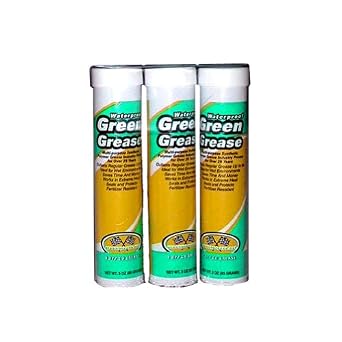
The Ultimate Grease


Image result for green grease
Green Grease by Omni Lubricants. There are other waterproof and corrosion inhibiting greases out there, but in lab torture testing with saltwater and in my experience, this is at another level. It doesn't wash off and it stops corrosion dead.

  •  Winches. I've used it for 10 years. Best Corrosion Protection in Practical Sailor testing.
  • Steering gear.
  • Shift and throttle cables.
  • Electrical connections (studs and nuts)
  • Battery Cables 
  • Rigging screws
  • Snap shackles
  • Carabiners
  • Furlers (those with metal bearings)
There are a few places I would use something else:
  • Seacocks. I still like lanolin or Lanicote; the thicker product better resists rinse-out and aids in sealing.
  • Head pumps. I use silicone grease. Any petroleum product will have some effect on the neoprene parts used in Dometic heads.
And there are places you don't use grease at all:
  • Winch pawls. Only oil. 
  • Sail tracks. Sailkote by McLube is my favorite.
  • Plastic ball bearings. Never grease. Never Sailkote or other dry lube. But the topic of oil is complicated; small amounts ( a few drops) are recommended by the manufactures under some conditions, specifically for travelers. Read the manual!

Tuesday, July 23, 2024

Mooring Knots

Rev. 7-23-2024

This is a new low for me.

Not only is the boat secured only by an overhand stopper stashed behind a dock cleat horn, he messed with the next boats tie-up (the other cleat on the next boat was a proper hitch).


But then I saw something even worse, primarily because it is the boat next to mine. The pity here is that I had tied a proper hitch... but he decide to re-tie the boat.


So when the marina staff won't fix it, and the owner won't fix it, and it is next to you, what do you do to keep your boat safe? I'm betting this boat is uninsured.

And there are more. This one resulted in the boat sinking a few weeks later.

 
A reversed cleat hitch ... sort of. Good luck releasing it under load. How do you even do this?
 
And finally, if you can't tie a knot ... tie lots.


Mainsheet Tackle Extension Using Strops


In a resent forum thread people were arguing (always) whether or not to put a swivel on the anchor.

Same question, but regarding mainsheet tackles. 

-----

If the tackle sheets to a winch it probably runs along under the boom and a swivel serves no purpose. You could extend the top block to save rope but it would increase the likelihood of twist in the tackle.So probably not.

However, if the tackle is hand sheeted through a cam cleat, probably yes.
  • The bottom blocks and cam cleat needs to rotate 120-180 degrees with every tack because the crew moves.
  • If the top block does not rotate to match the bottom the tackle will twist and rub.
The other question is do the blocks need to mount dirrectly to the traveler and boom, or can then be extended with strops?
 
Both  photos are Corsair F-24s.

The high cam cleat makes it easier to sheet from the windward ama.


The positives are:
  • An extension is lower friction than any swivel. Helpful at the top.
  • The rope can be reduced by 4-8 times the length of the extensions. For me, a 5-inch extension saved 35 inches of rope. Whoopee.
  • The cam cleat may be at a better height. A low cam cleat can make for impossible sheeting if the crew is sitting out. This is the most common reason for extending the bottom of the tackle.
  • Easier to attach the tackle if it is removed from the boom frequently. The strop is easier to grab than some big bundle of blocks that are turning.
The negatives are
  • Extending the top block downwards can put it at the perfect height to remove you teeth during a jibe. Boat specific.
  • The bottom block can be floppy for sheeting in light air.
  • Can be more difficult to grab the tackle and pull it across during a light air jibe.

 The short extension made for smoother swiveling during tacks. The bottom is direct to the traveler, which holds the cam cleat steady in light air.


 Any other thoughts?

I extended the top block on my F-24 down a little (dirrectly above) mostly because the top swivel was high friction. I extended the top block on my Stiletto 27 because the tackle came off every time the sail was lowered or reefed.

 This was a good many years ago, since it was taken with 35 mm film. The long extension made lifting the tackle easier (didn't have to grab floppy blocks and it was considerably lighter) when attaching it to the boom. 

 Jessica and I went sailing last week (almost 20 years later) and she's still smiling!